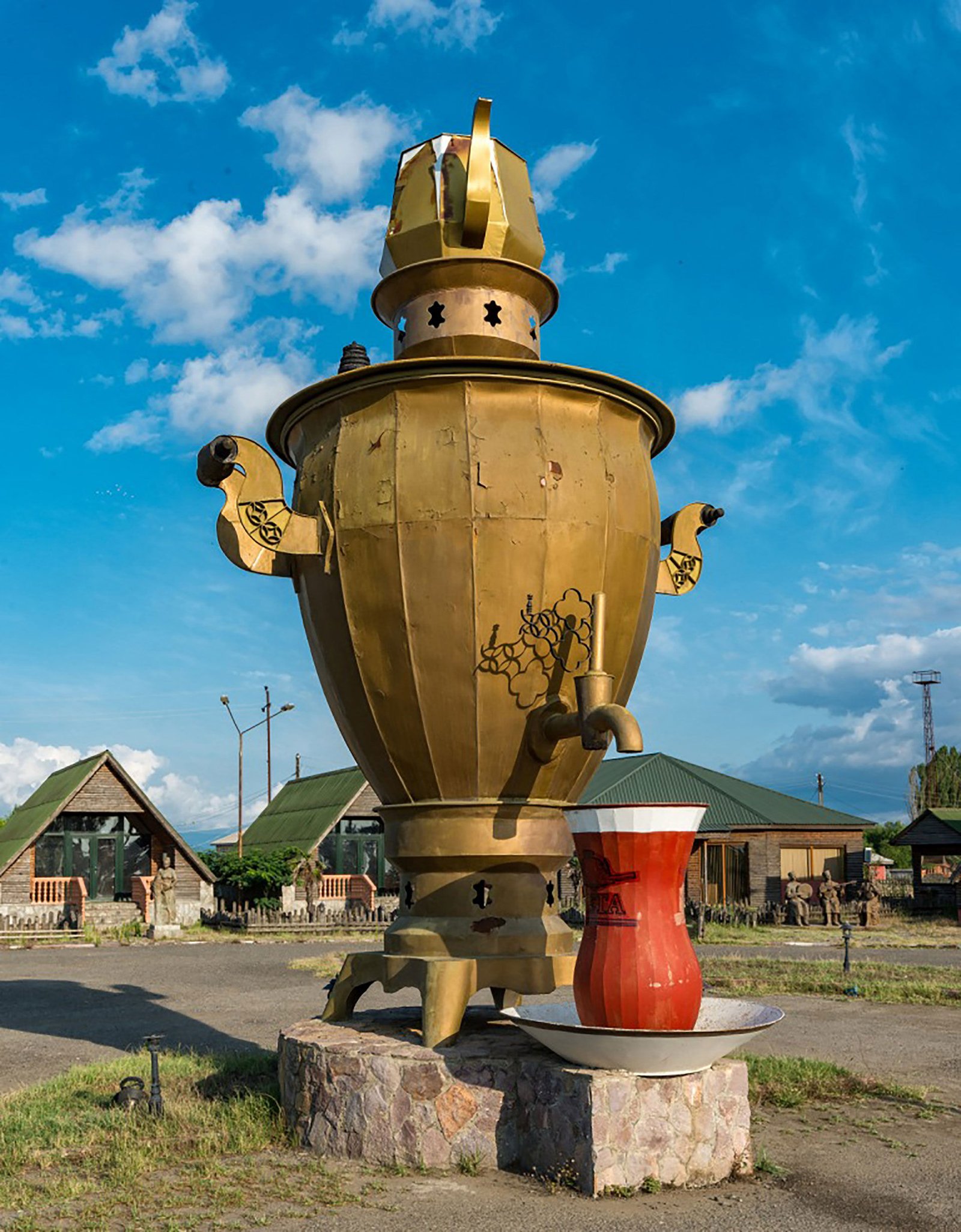
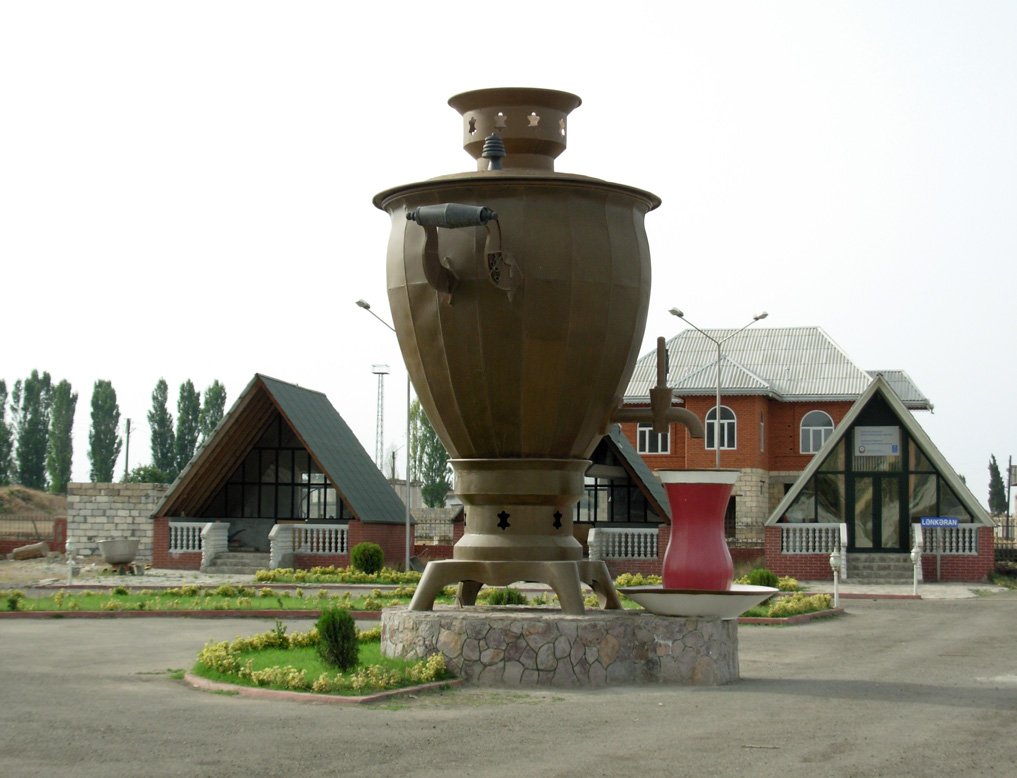
On the way into Lankaran, travelers see a giant golden samovar. Under its tap there is a red armud, a pear-shaped glass for tea, and it looks as if the tea was just poured. This is the Samovar Circle in Lankaran, a monument that needs no explanation. It simply invites you to get out of the car, stop and try what many people come to the south of the country for.
Tea Culture in Azerbaijan and the Armud
Tea culture in Azerbaijan is not only about a drink, but also about meeting people. Tea is offered to guests with jam, sweets and dried fruit, and the talk can last for several glasses. This kind of tea needs a special glass: the armud, which means “pear”. People say that its narrow “waist” helps you hold the glass and keeps the tea hot for longer. That is why the red armud under the samovar’s tap became a symbol of the whole region.
Lankaran Tea: Why It Grows Here
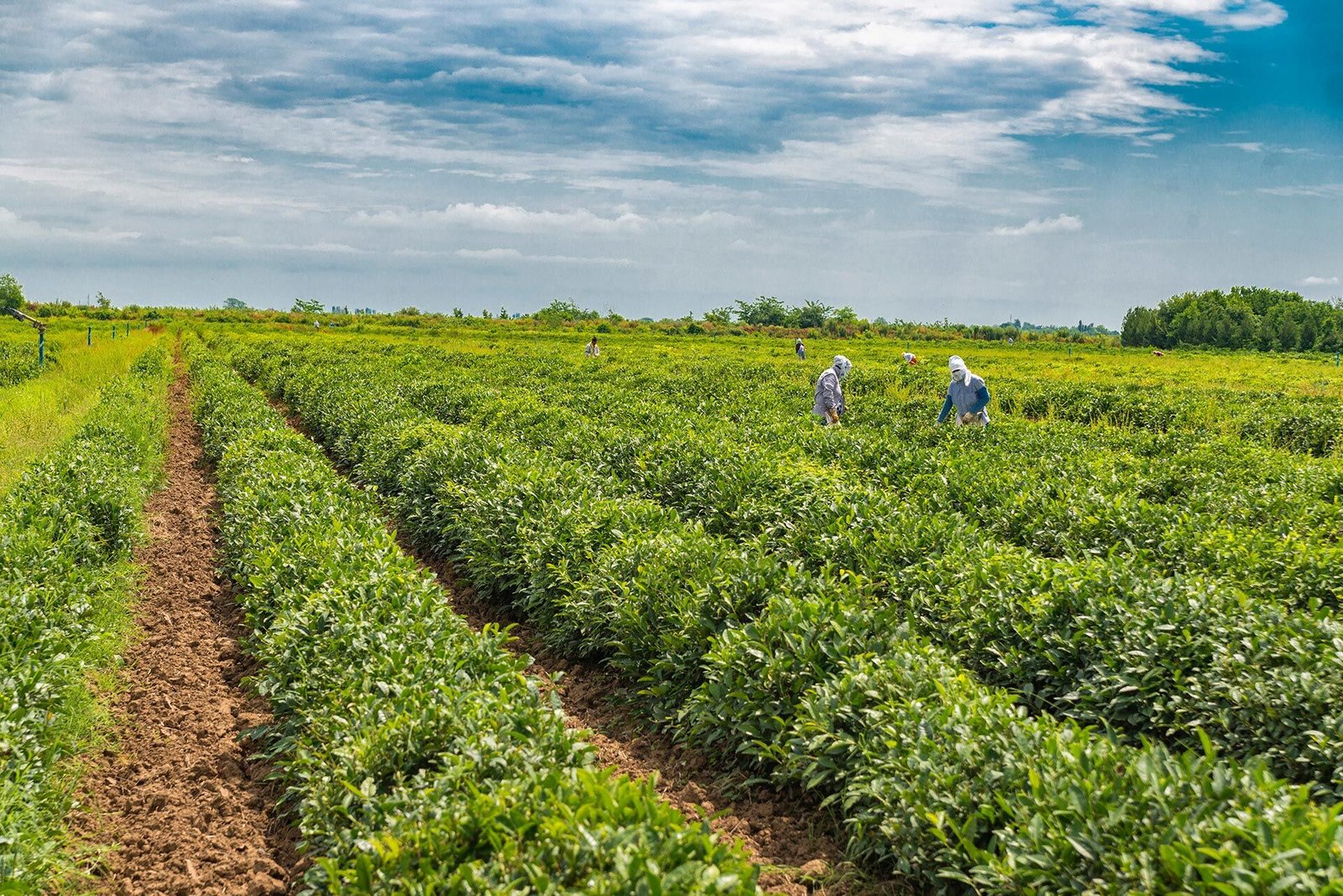
Lankaran has a subtropical climate: rice, citrus fruit, feijoa and kiwi grow here. Tea came to this area at the beginning of the 20th century, and by the 1930s tea plantations were an important part of the region. The mild, humid climate and green hills make Lankaran tea the main taste of the south. People often compare it with Ceylon tea, but it is better to check it yourself.
A City Known for Its Food
In 2021, Lankaran joined the UNESCO Creative Cities Network in the field of gastronomy. Tea has a special place in this cuisine, and the Samovar Circle became its best-known sign.
How to See the Samovar Circle and the Tea Places
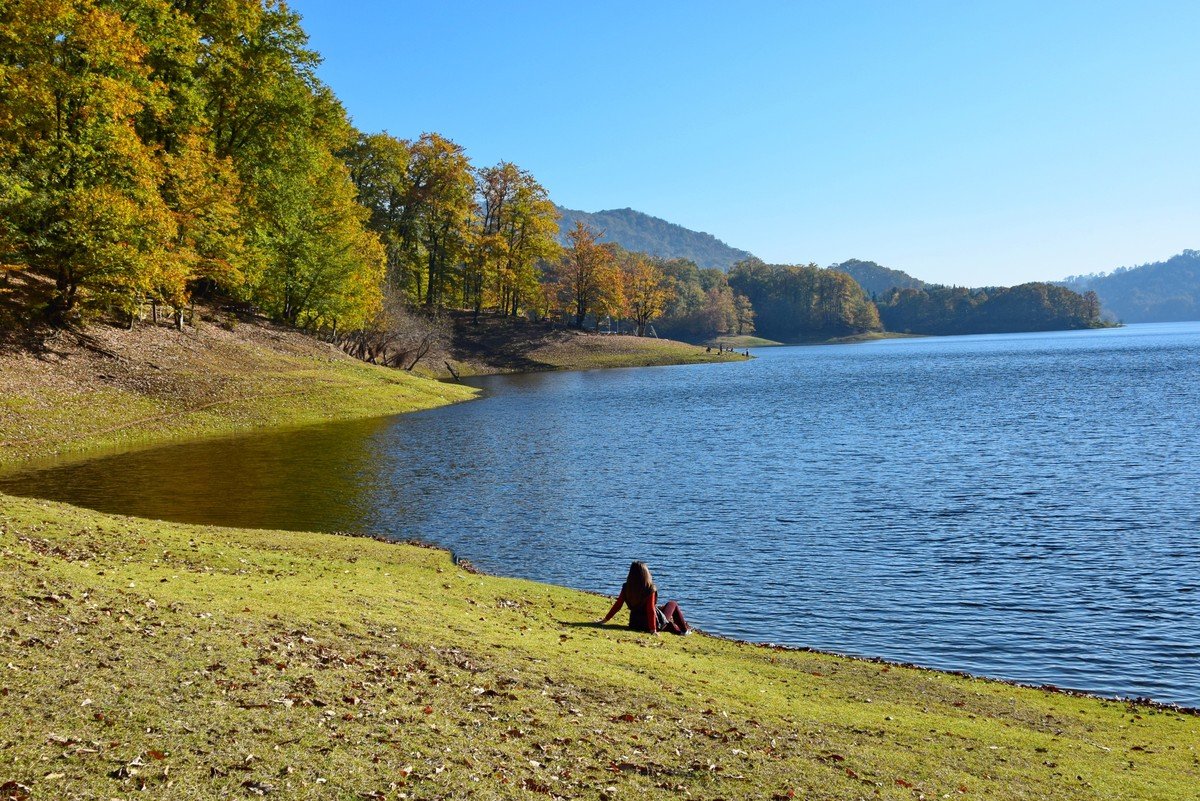
It is easy to see the Samovar Circle at the beginning of a trip to the south: it stands at the entrance to the city, and your acquaintance with Lankaran starts here. On these tours, guests walk through the tea plantations and see how tea grows and is picked, and they stop at Lake Khanbulan. A tea break with local tea and sweets is part of the program. These stops are part of tours around the regions of Azerbaijan, where tea and food show a region as well as nature and history do.
Tours in Lankaran with the Samovar Circle
- Tour to Southern Azerbaijan: Lankaran and Lerik — Tea plants and mountain landscapes — the Samovar Circle, tea plantations, a tea break at Lake Khanbulan, Buzeir caves and waterfalls.
- 2-Day Tour in Azerbaijan: Lankaran, Astara and Lerik — the samovar, plantations and Lake Khanbulan on the first day, a night in Lankaran, then Astara, Lerik and waterfalls.
Comments (0)
Leave a Comment