Located in the very heart of the Absheron Peninsula, among the arid landscapes just a few kilometers outside Baku, stands one of the most mystical shrines of the Caucasus - Ateshgah, the famous Fire Temple. The name, derived from the Persian word "Atash" meaning fire, perfectly captures the sacred essence of this ancient sanctuary. It is right here that you truly begin to understand why Azerbaijan has been historically revered as the "Land of Fire."
If you are currently mapping out your perfect azerbaijan tour, Ateshgah is a mandatory stop that will introduce you to a completely different, deeply spiritual side of the country.
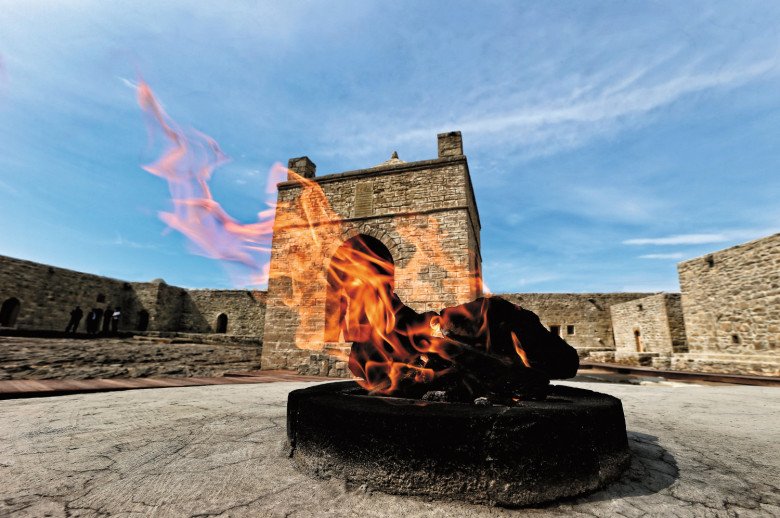
Fire as a Divine Manifestation
Humanity has always been simultaneously terrified and enchanted by the magic of fire. Long before the rise of modern global religions, spiritual seekers looked for tangible signs of divine presence. On the Absheron Peninsula, they found it breaking through the soil: due to massive underground natural gas reserves, natural flames would spontaneously ignite and burn continuously right on the rocks.
Drawn by the rumors of this miraculous land, Hindu Brahmins, Sikhs, and Persian Zoroastrians traveled across continents like moths to a flame. They established a unique stone-and-cave complex that eventually became one of the most prominent centers of Zoroastrianism in the Middle East.
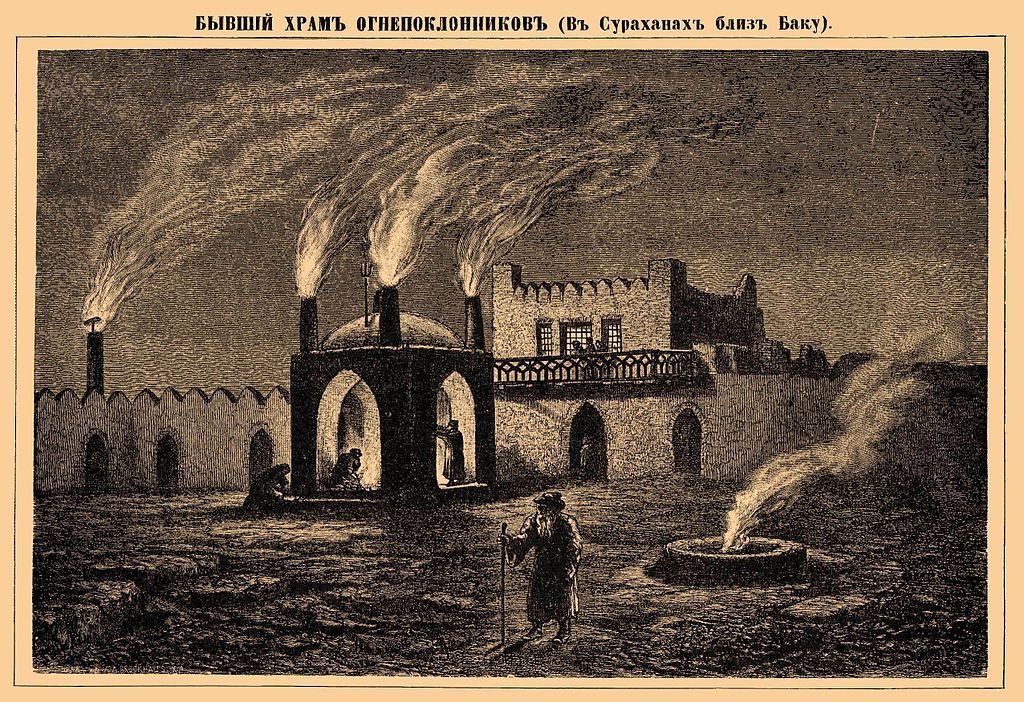
Temple Architecture and the Life of Ascetic Monks
From an architectural perspective, Ateshgah presents a harmonious synthesis of Zoroastrian and Hindu influences. The complex is designed as a fortified, pentagonal courtyard, securely shielded from the outside world by austere stone walls.
- The Central Altar: A four-cornered rotunda shrine featuring seven burning altars. The eternal flame dancing inside symbolizes the unbreakable bond between the sacred and the elemental.
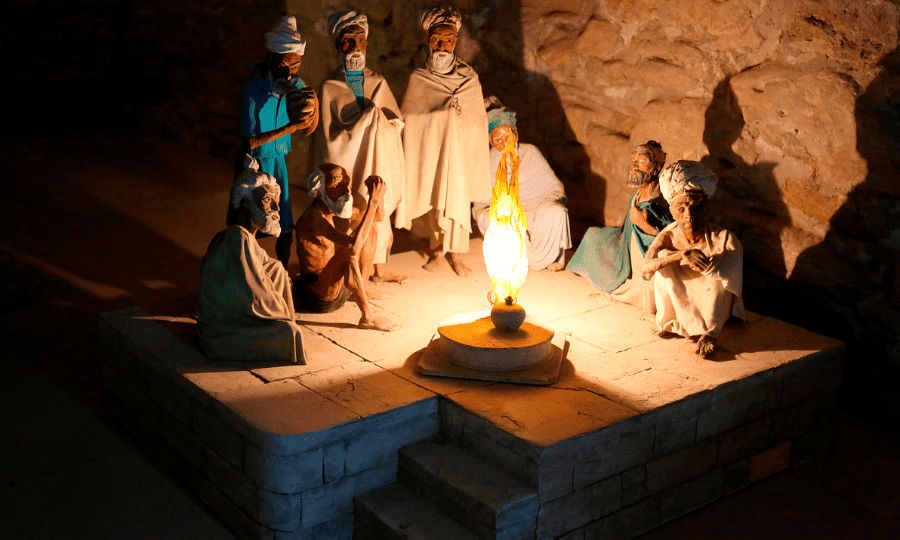
- Monastic Cells: Surrounding the courtyard are 26 small cells. However, their inhabitants had no interest in accumulating earthly wealth; their sole focus within the temple walls was solitude and spiritual purification.
The priests and ascetics lived under severe, self-denying conditions, seeking a path to Nirvana - regarded as the ultimate pinnacle of spiritual merit. Today, these cells house a detailed museum exhibition with realistic life-sized figures, vividly illustrating the harsh lifestyle and daily rituals of the hermits. Original inscriptions carved in Sanskrit and Persian still adorn the stone walls, serving as invaluable historical evidence of ancient cultural ties.
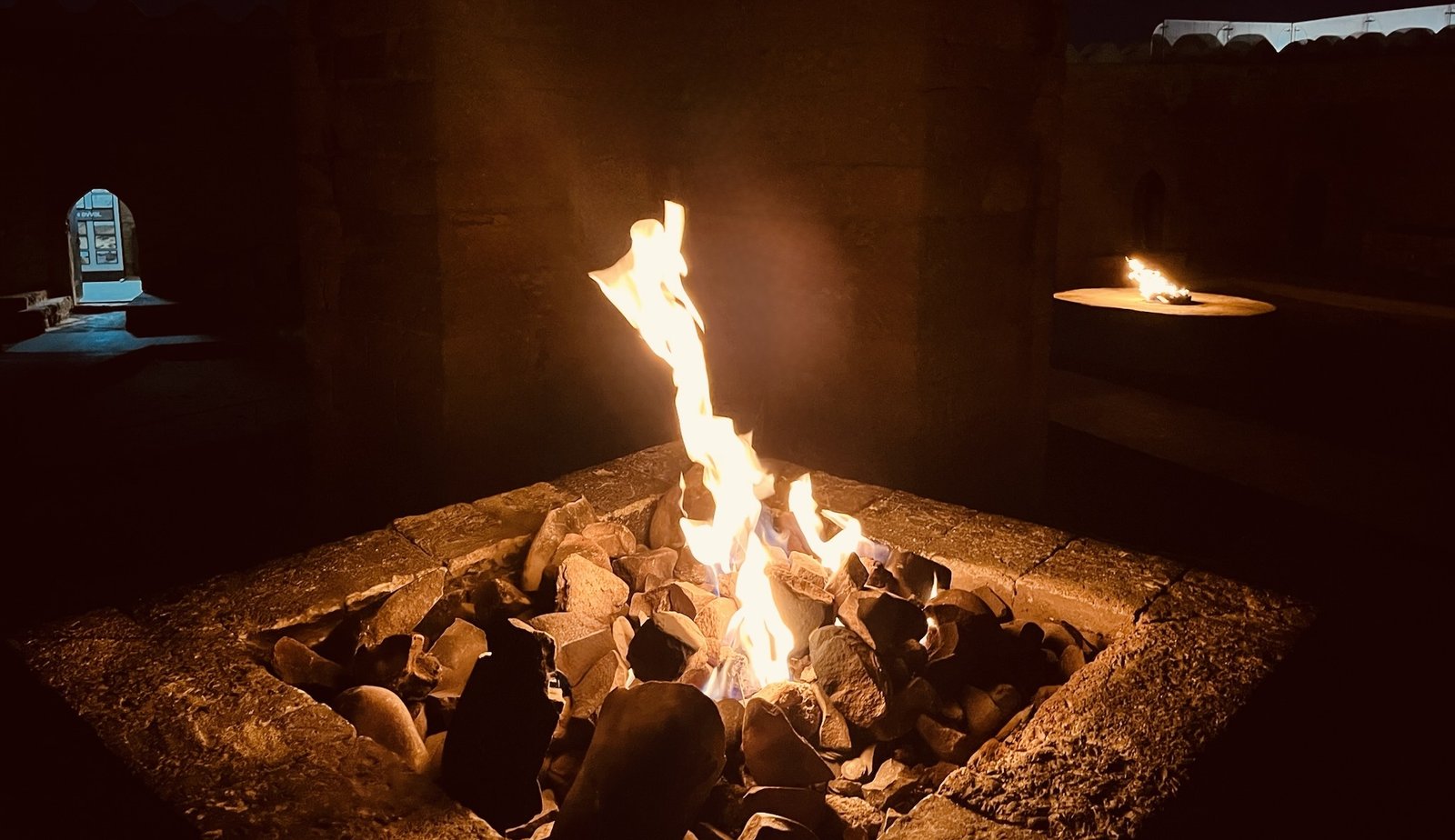
Faith and Commerce: Ateshgah on the Great Silk Road
The bustling trade routes of the Great Silk Road intersected very close to the temple, which gradually transformed this quiet spiritual sanctuary into a thriving caravan-serai. Merchants transporting silk, spices, and porcelain between East and West regularly paused on the Absheron Peninsula, supplying the temple with significant financial resources.
During that era, the merchant profession was incredibly perilous; half-year journeys were burdened with life-threatening trials. While merchants were rarely deeply religious in their daily routines, they eagerly sought divine solace during times of distress. They firmly believed that the gods would favor the prayers of holy ascetics over their own.
- The hermits progressed toward sanctity through their endless prayers.
- The merchants gained spiritual reassurance and divine protection for their valuable caravans.
- The temple flourished and expanded due to generous financial rewards.
Because of these profound historical layers, premium tours azerbaijan offers today are simply unimaginable without a journey into the mystical heritage of the Absheron Peninsula.
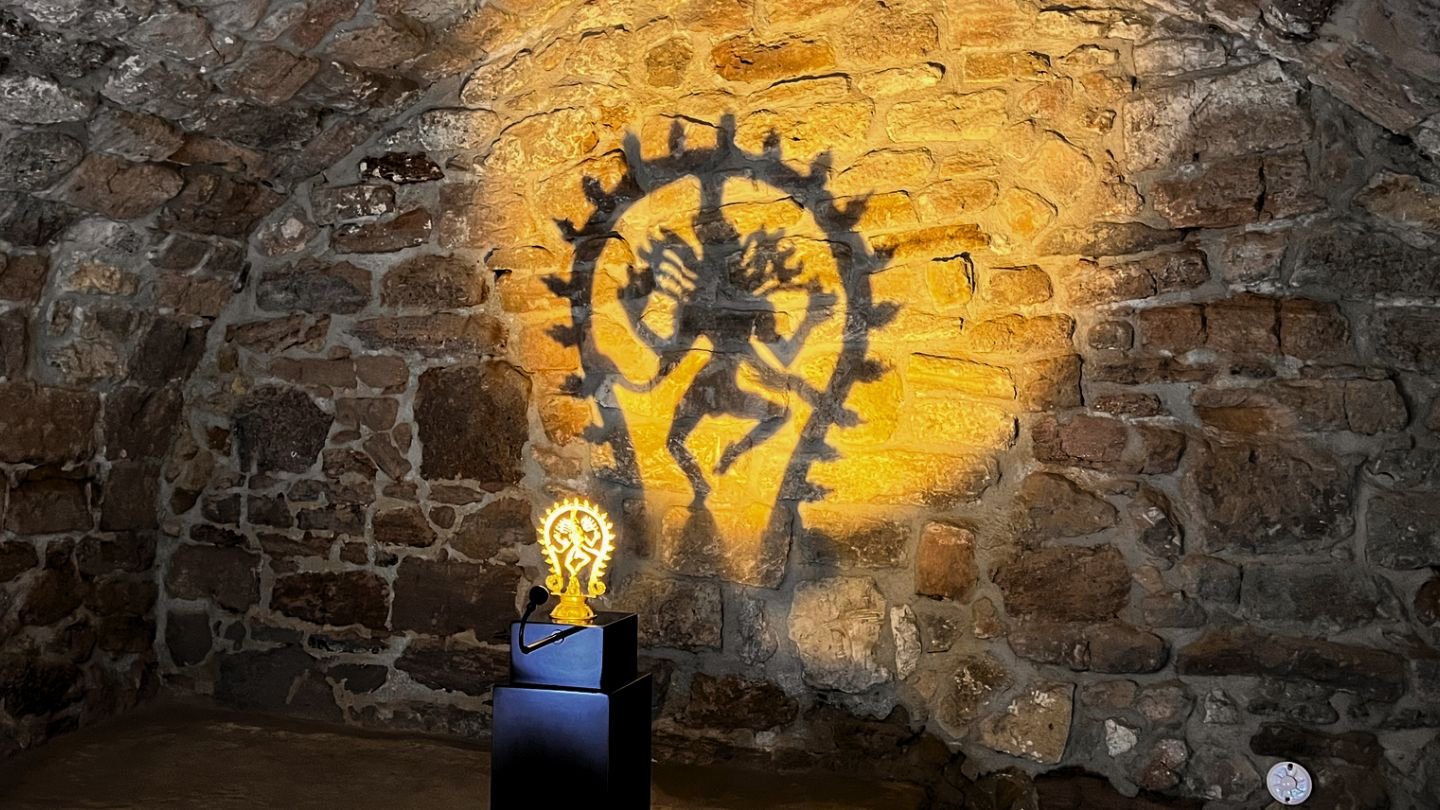
Why You Should Visit Ateshgah
Ateshgah continues to captivate global travelers with its otherworldly glow and an atmosphere of ringing silence. It is a place where you can genuinely feel the intersection of Caucasian, Indian, and Persian cultures, seeing firsthand how a natural phenomenon gave birth to a profound philosophy.
When browsing through available azerbaijan tours, we highly recommend choosing an itinerary that combines the Fire Temple with a trip to the burning hill of Yanardag to fully experience the natural fiery wonders of Absheron.
To walk across the ancient pentagonal courtyard, peer into the cells of the ascetics, and unlock the hidden secrets of the Silk Road, book our signature Gobustan and Absheron Tour.
Comments (0)
Leave a Comment