present you 5 Nights 6 Days #3 tour
- fdgdfgb
- kuki
- i8
present you 5 Nights 6 Days #3 tour
Meeting at the airport and transfer to your hotel. Arrival and check-in.
The journey begins at the Heydar Aliyev Center — one of the most recognizable architectural masterpieces in modern Azerbaijan, created by the legendary architect Zaha Hadid. Its flowing white curves and futuristic design have turned the building into a symbol of contemporary Baku and the country’s modern identity. Even before entering the complex, visitors are impressed by the innovative architecture and the sense of movement reflected in its unique form.
Inside the center, guests explore exhibitions dedicated to Azerbaijani culture, history, art, and national development, along with temporary installations and a famous collection of classic automobiles. Around two hours are allocated for this stop, allowing travelers to comfortably enjoy one of the most remarkable cultural spaces in the Caucasus region.
The next part of the route introduces guests to the Heydar Mosque — one of the largest and most beautiful mosques in the Caucasus. The elegant combination of traditional Islamic architecture and modern design creates a calm and harmonious atmosphere from the very first moments of the visit. Bright stone facades, graceful minarets, and refined decorative details make the complex especially impressive.
The interiors are decorated with intricate calligraphy, traditional ornaments, and delicate carvings reflecting the rich spiritual culture of Azerbaijan. Visiting this landmark allows travelers to better understand the country’s religious traditions and cultural identity through architecture and artistic design.
During the program, guests enjoy a lunch break featuring traditional Azerbaijani cuisine and local hospitality. The menu includes qutab, rice, assorted kebabs, fresh salad, bread, soft drinks, and aromatic Azerbaijani tea, which holds a special place in the country’s culinary traditions.
This gastronomic stop adds another dimension to the journey, allowing visitors to experience local culture not only through architecture and history, but also through authentic national flavors. For many travelers exploring tours in Azerbaijan, traditional cuisine becomes one of the most enjoyable parts of the experience.
After lunch, the route continues to Highland Park — the main panoramic viewpoint of the capital overlooking Baku Bay and the central districts of the city. From the terraces above the coastline, visitors enjoy spectacular views of the Caspian Sea, Baku Boulevard, Crystal Hall, the Ferris wheel, and the modern skyline stretching across the waterfront.
This section of the Baku City tour offers some of the best photo opportunities in the capital. The famous Flame Towers appear especially impressive from this viewpoint, while the combination of sea panoramas and contemporary architecture perfectly reflects the unique atmosphere of modern Baku.
The program then moves to Baku Boulevard — one of the most elegant seaside promenades along the Caspian coast. Green parks, coastal walkways, modern public spaces, and fresh sea air create a relaxing atmosphere that contrasts beautifully with the busy energy of the city center.
Particular charm comes from Little Venice, where decorative canals, bridges, and gondolas create the feeling of a small European resort in the heart of Baku. Within this part of the route, guests enjoy a softer and more peaceful side of the capital, while the surrounding waterfront area offers excellent opportunities for walking, photography, and leisure.
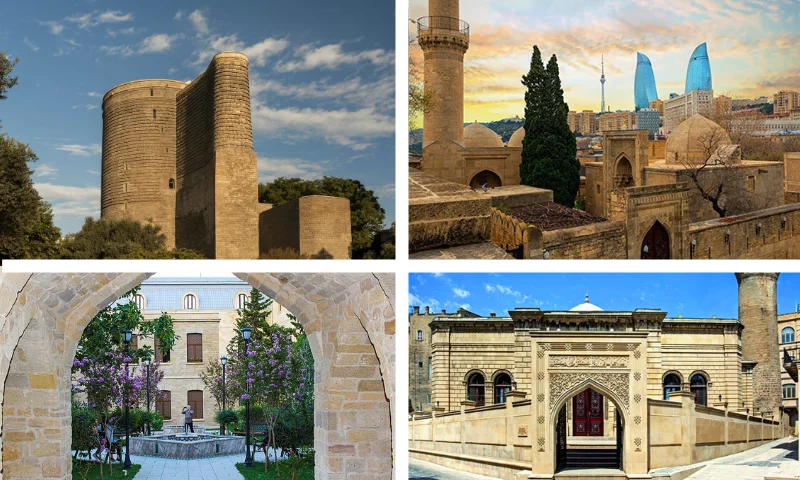
The final part of the route takes guests to Icherisheher — the historical heart of Baku and a UNESCO World Heritage Site surrounded by ancient fortress walls. Narrow stone streets, hidden courtyards, and centuries-old architecture create the atmosphere of a living open-air museum where history can be felt in every detail. During the walk, visitors discover the Maiden Tower, the Palace of the Shirvanshahs, ancient caravanserais, and traditional architectural landmarks preserved from different historical periods.
For centuries, Icherisheher stood at the crossroads of major trade routes connecting Europe and Asia, shaping a unique blend of cultures, architecture, and civilizations inside the Old City walls. Many historians consider this district one of the most important preserved medieval urban areas in the Caucasus, where traces of Persian, Ottoman, Shirvanshah, and Russian influence can still be seen throughout the ancient streets. Today, the Old City tour remains one of the most memorable cultural experiences in the capital, where history, panoramic scenery, and contemporary architecture come together in a refined Baku sightseeing tour. For many international visitors, this experience becomes the ideal azerbaijan tour for discovering the spirit of Baku in a single day.
Shamakhi is the old capital of the Shirvanshah state and one of the oldest cities in the Caucasus. It gave the region hundreds of poets, builders, and craftsmen, and historians still study their work today. The first stop on the tour is the Juma Mosque, built in 743 AD. It is one of the oldest mosques in the Caucasus. Its large domes and simple, strong style show the spirit of the time when Islamic culture first came to this region.
The mosque was destroyed and rebuilt several times through history, but it always came back to life as the spiritual center of the city. A walk through the courtyard and a short story about its history set a calm and thoughtful tone for the whole trip — even before the first mountain peaks appear through the bus window.
The road continues through the Ismayilli Forest — a thick woodland that people rightly call the green heart of the Caucasus. Old oak and maple trees, along with rare local plants, create a dense canopy. Sunlight only reaches the ground in thin rays, giving the forest an almost magical feel.
You don't need a full hike in the mountains of Azerbaijan with a heavy backpack to enjoy this place. A few minutes among these old trees is enough to feel the scale of untouched nature. The air feels noticeably cleaner, city noise turns into the sound of wind in the trees, and short stops let you breathe deeply and slow down. These small breaks make the trip feel alive, not just a list of sights.
The hanging bridge over a fast mountain river, on the way to Lahij village, has quietly become one of the most memorable stops on this route. The bridge seems to float above the rushing water, and the light swinging under your feet adds a small sense of adventure. Around you, green slopes and thick forests of the Ismayilli region stretch out in every direction.
Travelers often stop here to listen to the river, breathe the fresh mountain air, and take one of the best photos of the day — with the gorge, the greenery, and the fast-moving water all in one frame.
The restaurant sits on a hill with a view over a green valley and the peaks of the Northern Caucasus — a place where you may want to stay a little longer, just for the view. Traditional Azerbaijani dishes are served here, and trying local food becomes just as important as seeing the historical sites. Good food breaks like this one have become a real trademark of quality tours and excursions in Azerbaijan.
There is no need to rush at the table, but the most active part of the day still lies ahead, so the group doesn't stay too long. After a short rest, everyone is back on the bus, heading to Gabala, where the mountains become the main characters of the journey.
The road leads to the "Seven Beauties" Waterfall. It falls in several steps, hidden deep in the forest, and on hot days it feels noticeably cooler here than on open parts of the route. The name comes from a local legend that people in Gabala still tell today, which gives the place an extra sense of mystery.
The path to the upper levels goes up wooden stairs and forest trails — a short but truly lively part of the trip, easy enough even without special fitness. Fresh mountain air, the sound of falling water, and bright photos against green slopes turn this short walk into one of the clear highlights of the whole journey.
Gabala was once the ancient capital of Caucasian Albania, and entering the city already shows how rich this visit will be. The high point of this part of the tour is the Tufandag resort, one of the largest and most modern ski resorts in Azerbaijan.
A cable car takes visitors up to Yatmish-Gezel Peak ("Sleeping Beauty"), about two thousand meters above sea level, with wide views over the city and nearby mountains. For many guests, this ride is the moment that makes a mountain tour in Azerbaijan worth choosing. Even outside the winter season, you can walk along the trails, feel the scale of the Caucasus, and take photos to remember.
Once the first day's program ends, guests check into their chosen hotel, and the evening is completely free: you can use the hotel's facilities, take a walk through Sheki's cozy streets, try some local dishes, or simply rest before day two.
The next morning, until 1:00 PM, the time is free again — guests can spend it around the city on their own and keep using the hotel's facilities. At the set time, the guide will pick up the group from the hotel, and the trip continues with the day-two program.
Since day two runs as a group tour, the start time may shift slightly in some cases. If that happens, the guide will let you know the exact meeting time in advance.
The Sheki Palace Hotel is more than just a place to sleep — it's part of the hospitality of Sheki itself. Located in the city center, it lets you go for an evening walk, stop by a local tea house, or simply wander the streets, where time seems to move slower than in the capital.
You will feel the warmth of local people from the very first minutes — here, it's normal to offer food, give advice, and share stories about the city. A quiet evening and a comfortable room give you the energy for a full second day of the tour.
The Palace of the Sheki Khans is a UNESCO World Heritage Site and the city's main architectural treasure. It was built at the end of the 18th century by the Sheki Khans, a powerful family that ruled the region for more than two hundred years. The palace amazes visitors with its stained-glass shabaka windows, built without a single nail, and with wall and ceiling paintings that cover every room.
A tour through the palace rooms brings you back to the era of the Azerbaijani khanates. You can feel the atmosphere of power, luxury, and Eastern style in every small detail. It's easy to see why this palace usually tops any list of the main sights of Sheki and Gabala. The garden around the palace, with its century-old plane trees, adds even more charm to the visit.
The Sheki Caravanserai, built in the 18th century, once gave shelter to merchants traveling along the Great Silk Road. Its thick stone walls, inner courtyard, and arched galleries still look much the same as they did centuries ago, and the building still works as a hotel today.
Small shops inside the caravanserai now sell traditional Azerbaijani souvenirs and handmade items. Walking through the galleries lets you almost touch the history of the old trade caravans and imagine how busy this place once was.
In the old part of the city, shops that have worked since the 18th century still stand. Here you can buy Sheki silk, ceramics, jewelry, and the town's famous sweets, made from recipes passed down for generations in halvachi families.
Trying Sheki baklava and other desserts turns simple shopping into a food adventure, and talking with local sweet-makers teaches you more about the city's traditions than any guidebook. Small details like these are what make a Sheki and Gabala excursion feel so rich — the city shows itself not only through its buildings, but also through taste and craft.
The park sits on a beautiful hilltop and offers wide views over the whole city and the surrounding mountains. Inside, there is a memorial for soldiers who died in World War II — a quiet place worth a few minutes of your time.
This spot gives some of the most striking photos of the whole trip: red-tiled roofs of the old town against green mountains create an almost postcard-like view that stays in travelers' memories for a long time.
Before visiting the ancient temple, the group stops for lunch at a restaurant next to a local museum, which has welcomed guests for more than twenty years. Here you can try the famous Sheki piti — a rich lamb soup, slow-cooked and served in a clay pot, along with a fresh salad and cold drinks.
This lunch is more than just a break in the schedule. It's a full introduction to the region's food culture: hearty, simple, and full of flavor, made from recipes that haven't changed in decades.
Kish is one of the oldest villages in modern Azerbaijan, and its temple from the time of Caucasian Albania is a rare monument of pre-Christian and early Christian architecture in the region. The simple but striking stone shapes of the temple carry the marks of a history older than many European civilizations.
This traditional Caucasian village becomes the true heart of the whole cultural route, giving a look into Azerbaijan's rich, layered heritage long before Islamic architecture arrived. Here, you see why a two-day tour of Azerbaijan can hold so much: in less than two days, you touch layers of history that go back thousands of years.
The road back is full of pleasant tiredness and warm memories. A short stop in Shamakhi, and soon the night lights of the capital appear outside the window. The city welcomes you with familiar shapes, but you see it differently now — two days in the mountains and old town streets leave a mark that doesn't fade right away.
This kind of trip shows clearly why more and more travelers, already familiar with the capital, are choosing regional tours in Azerbaijan to see the country in a deeper way. Gabala and Sheki stay in your memory not as a set of photos, but as a full story, told by mountains and centuries.
Our journey begins early in the morning in the capital of Azerbaijan — Baku. Leaving the city behind, the group travels toward the first natural attraction of the route — the famous Masazir Pink Lake.
This is one of the most unusual lakes in the country, well known for its rare natural color. Only a few lakes like this exist in the world, and Masazir Lake holds a special place among them because of its rich palette of pink shades.
The unusual color of the water appears thanks to halophilic algae that live in salty water and produce a natural pigment called carotenoid. Depending on the level of salt and the amount of sunlight, the surface of the lake can change its shades from soft pastel pink to bright and intense colors. Because of this unique phenomenon, many travelers join a Pink Lake tour to see this natural wonder with their own eyes.
Besides its unusual beauty, the Pink Lake has historically been an important place for salt production. Local people collected salt here for generations using traditional methods, and today this area still keeps traces of centuries-old salt harvesting traditions.
The lake is not visited from August 1 to May 10 because during this period the water usually loses its pink shade.
The next stop on the way to the highland village leads travelers to the Khizi region. Here guests make a stop at the foothills of the Greater Caucasus Mountains, which gradually transform into an unusual natural phenomenon — the colorful hills of Khizi.
Historically this region has been home to the Daglis, a sub-ethnic group of Iranian origin connected to Azerbaijani Persians and considered one of the few European Persian communities.
Khizi is famous for its extraordinary landscapes. The local mountains are often called Agate Mountains, Rainbow Mountains, or Candy Cane Mountains because of their bright striped slopes. Red, orange, purple, and pink layers resemble colorful minerals and create a stunning natural pattern across the hills.
The winding road passes through these amazing landscapes and opens panoramic views that impress even experienced travelers. Many visitors specifically choose a tour to Candy Cane mountains in order to witness one of the most unusual natural formations in the country and better understand how diverse tours in Azerbaijan can be.
About one hundred kilometers from Baku, the famous Mount Beshbarmag appears on the horizon. Its name translates as “Five Fingers,” and for centuries this peak has been considered a sacred place with an important role in local traditions.
For a long time this territory was inhabited by Azerbaijani Daglis who belong to ancient Iranian tribes of the region. Many legends are connected with this mountain. One of the most famous stories speaks about the Quranic figure Khidr, who in local traditions is believed to be the protector of travelers.
Guests traveling along this route usually make a stop here to rest. Visitors can enjoy beautiful views of the Caucasus Mountains, listen to stories from the guide, and relax after the road.
The bus stops at a public parking area that offers an impressive panoramic view of the Greater Caucasus range. In this place visitors can see old caravan stops, a mosque, small shops, and local cafes. Since ancient times Beshbarmag has been a place of pilgrimage, and many people still believe that this place has special energy and can help wishes come true.
The next part of the route passes through one of the most picturesque forest areas of northern Azerbaijan — the Gechresh Forest. This dense and green forest leaves a strong impression on travelers thanks to its natural beauty.
The road goes between tall trees whose thick branches form a natural green tunnel. In summer the leaves almost completely cover the sky, creating a cool and peaceful atmosphere.
The scenery here looks like something from a fairy tale: a winding road stretches through the forest while a mountain river flows nearby. With every kilometer travelers get closer to the high mountain areas of the Caucasus.
In this beautiful forest guests will stop for lunch. Visitors can try traditional Azerbaijani dishes prepared according to local recipes while enjoying fresh mountain air and the calm atmosphere of nature. Local restaurants offer a variety of meals, and prices remain quite affordable for travelers.
One of the most impressive natural places along the route is the Gudialchay River Gorge. From a geological point of view, this territory is considered one of the oldest natural zones in the region.
The road runs between high cliffs while a powerful mountain river flows nearby. About thirty minutes of travel through this area allows visitors to fully experience the atmosphere of wild nature and feel the strength of the mountain landscape.
Places like this make tours around the regions of Azerbaijan truly unforgettable. The contrast between cliffs, river water, and fresh mountain air creates a feeling of complete connection with nature and allows travelers to forget about the noise of the city
The main destination of the journey is the ancient highland village of Khinaliq. The road to the village passes through the majestic peaks of the Greater Caucasus and rises to an altitude of about 2500 meters above sea level.
Khinaliq is considered one of the highest and oldest settlements in the Caucasus. Local residents speak a unique language that has no close equivalent among other languages in the region.
Narrow streets, stone houses, and ancient architecture create the impression of a living open-air museum. Many historians believe that the settlement may be around four thousand years old.
According to local legends, the village was founded by ancient tribes who found shelter among the mountain peaks. During the walk through the village guests learn fascinating facts about the history and culture of Khinaliq, discover the traditions of its residents, and see the unique lifestyle of a mountain community.
After exploring this ancient village, travelers return to Baku. The road passes through the same mountain landscapes, which now appear from a new perspective. This route remains one of the most impressive tours in Azerbaijan, allowing visitors to experience the rich nature, history, and culture of the northern regions of the country. Many travelers who join the Tour to Khinaliq say that it becomes one of the most memorable experiences among all azerbaijan tours
Check-out and transfer from your hotel to the airport.
Tour Duration:
Cancellation Policy: Free cancellation up to 7 days before tour.
-[
Customer Reviews (0)
Leave a Review